Important: This article is for informational purposes only. Please read our full disclaimer for more details.
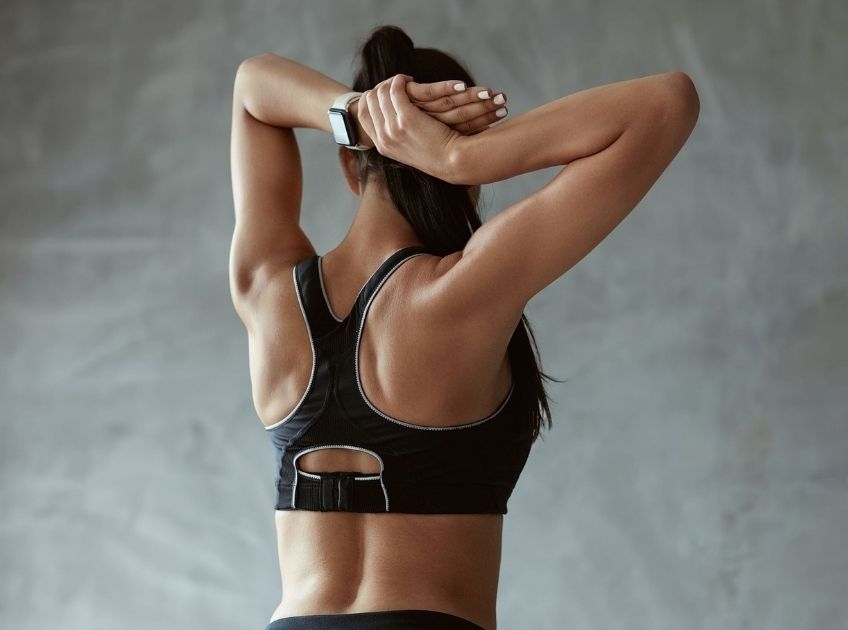
Let’s be real: we’ve all done the “over-the-shoulder” mirror check and wished for a smoother silhouette under a bra strap or a snug tee. While “spot reduction” is a myth, strengthening the posterior chain is the secret sauce to a toned, upright posture and a leaner look.
“Strength training the back isn’t just about aesthetics; it’s the foundation of functional movement. A strong back protects the spine and improves metabolic rate.” — Dr. Sarah Jenkins, Physical Therapist
The best part? You don’t need a rack of heavy weights. This 10-minute daily circuit focuses on high-repetition, controlled movements designed to fire up your upper, middle, and lower back.
The “Back-to-Basics” 10-Minute Circuit
This routine follows a 45 seconds work/15 seconds rest format for maximum efficiency.
| Order | Exercise | Primary Muscle Group | Difficulty |
| 1 | Superman | Lower Back & Glutes | Moderate |
| 2 | Back Extensions | Lumbar Spine | Moderate |
| 3 | Bent-Over Rows | Upper Back (Bra Bulge) | High |
| 4 | Swimming | Total Posterior Chain | High |
| 5 | Reverse Fly | Rear Shoulders | Moderate |
| 6 | Plank-to-Pushup | Shoulders, Back, & Core | High |
| 7 | W-Extensions | Mid-Back & Traps | Moderate |
| 8 | Side Plank (L/R) | Obliques & Side Back | Sustained |
| 9 | Cat-Cow Stretch | Mobility & Recovery | Low |
Step-by-Step Exercise Guide
1. The Superman
How to do: Lie face down with arms extended. Simultaneously lift your arms, chest, and legs off the floor. Hold for 2 seconds at the top.
Repetitions: Aim for 12–15 slow lifts or a 45-second sustained hold.
How Long to See Results: 4–6 weeks for improved lower back stability.
Best for: Correcting an arched lower back and building glute strength.
Pro Tip: Look at the floor to keep your neck in a neutral, safe position.
2. Back Extensions
How to do: Lie on your stomach, hands behind your head. Lift only your chest off the floor while keeping your feet planted.
Repetitions: 15–20 reps.
How Long to See Results: 4 weeks for better sitting posture.
Best for: Office workers who sit for 8+ hours a day.
Pro Tip: Squeeze your glutes throughout the move to protect your spine.
3. Bent-Over Rows
How to do: Hinge at your hips, back flat. Pull your elbows back (with water bottles or weights), squeezing your shoulder blades together.
Repetitions: 15–20 reps.
How Long to See Results: 6–8 weeks for visible definition in the mid-back.
Best for: Reducing the appearance of “bra bulge.”
Pro Tip: Imagine you are trying to crush an orange between your shoulder blades.
4. Swimming (Prone)
How to do: On your stomach, alternate lifting your opposite arm and leg in a rapid, rhythmic “swimming” motion.
Repetitions: Continuous for 45 seconds.
How Long to See Results: 4 weeks for improved coordination and core power.
Best for: Endurance athletes and those seeking total-body toning.
Pro Tip: Keep your core pulled away from the floor to engage your deep abs.
5. Reverse Fly
How to do: Hinge forward, arms hanging down. Lift your weights out to the sides like “wings,” keeping a slight bend in the elbows.
Repetitions: 12–15 reps.
How Long to See Results: 8 weeks for broader, toned shoulders.
Best for: Fixing rounded shoulders (the “slouch”).
Pro Tip: Pause for a split second at the top of the movement.
6. Plank-to-Pushup
How to do: Start in a forearm plank. Push up onto your right hand, then left hand, into a high plank. Lower back down one arm at a time.
Repetitions: 10–12 lead-arm changes.
How Long to See Results: 4 weeks for noticeable core and shoulder strength.
Best for: High-intensity fat burning and core stability.
Pro Tip: Keep your hips as still as possible—don’t let them rock side to side!
7. W-Extensions
How to do: Face down, bring arms out to the sides with elbows bent at 90 degrees (making a “W”). Lift chest and pull elbows down toward your hips.
Repetitions: 15 reps.
How Long to See Results: 6 weeks for a more “upright” appearance.
Best for: Targeted mid-back strengthening.
Pro Tip: Focus on the downward pull rather than just the lift.
8. Side Planks (Left & Right)
How to do: Prop yourself on one forearm, feet stacked or staggered. Lift your hips so your body forms a straight line.
Repetitions: Hold for 45 seconds per side.
How Long to See Results: 4 weeks for a firmer waistline.
Best for: Sculpting the “love handle” area of the back.
Pro Tip: Reach your top arm toward the ceiling to keep your chest open.
9. Cat-Cow Stretch
How to do: On all fours, inhale as you arch your back (Cow), then exhale as you round your spine toward the ceiling (Cat).
Repetitions: 10 slow cycles.
How Long to See Results: Immediate relief from back tension.
Best for: Cooling down and spinal mobility.
Pro Tip: Move slowly with your breath to maximize the stretch.
Tips for Success
- Consistency is King: Perform this routine 3–4 times a week.
- Resistance: If bodyweight feels too easy, use 3–8 lb dumbbells or water bottles.
- The “Kitchen” Factor: Combine this with a diet rich in lean protein to reveal the muscle you’re building.
“Motivation is what gets you started. Habit is what keeps you going.” — Jim Ryun
Frequently Asked Questions (FAQ’S)
1. Can I really reduce back fat in just 10 minutes?
A. You cannot “spot reduce” fat. However, building back muscle creates a tighter silhouette, and the metabolic boost from this circuit helps burn overall body fat.
2. Is it okay to do this every day?
A. Yes, since these are low-impact movements. However, if you add heavy weights, give yourself 24 hours of rest between sessions.
3. Do I need equipment?
A. No equipment is required! Water bottles or canned goods work perfectly for the Rows and Flies.
4. What if I have lower back pain?
A. Focus on the Cat-Cow and Side Planks first to build stability. Avoid the Superman until your core feels stronger.
3. How long until I see a “V-taper” look?
A. With consistent effort and a clean diet, most people see significant muscle definition changes in 8–12 weeks.
Always consult a doctor before starting a new exercise routine. Stop immediately if you experience sharp pain or dizziness. This content is for informational purposes only and does not replace professional medical advice.