Important: This article is for informational purposes only. Please read our full disclaimer for more details.
A baking soda foot soak can help soften rough, dead skin so it’s easier to remove, but dermatologists and medical writers warn that its high pH can irritate and dry out the skin if you overdo it or have sensitive feet. Used occasionally, in a weak solution and followed by proper exfoliation and moisturizing, it can be part of a safe at‑home routine—but it’s not the only or best option for everyone.
Article Contains
- What Is a Baking Soda Foot Soak?
- How Baking Soda May Help with Dead Skin
- Why You Should Be Cautious
- People Who Should Be Extra Careful or Avoid It
- How to Do a Safe Baking Soda Foot Soak (Step‑by‑Step)
- How Often Can You Use a Baking Soda Foot Soak?
- Alternatives to Baking Soda Foot Soaks for Dead Skin
- Foot Soak Options for Dead Skin
What Is a Baking Soda Foot Soak?
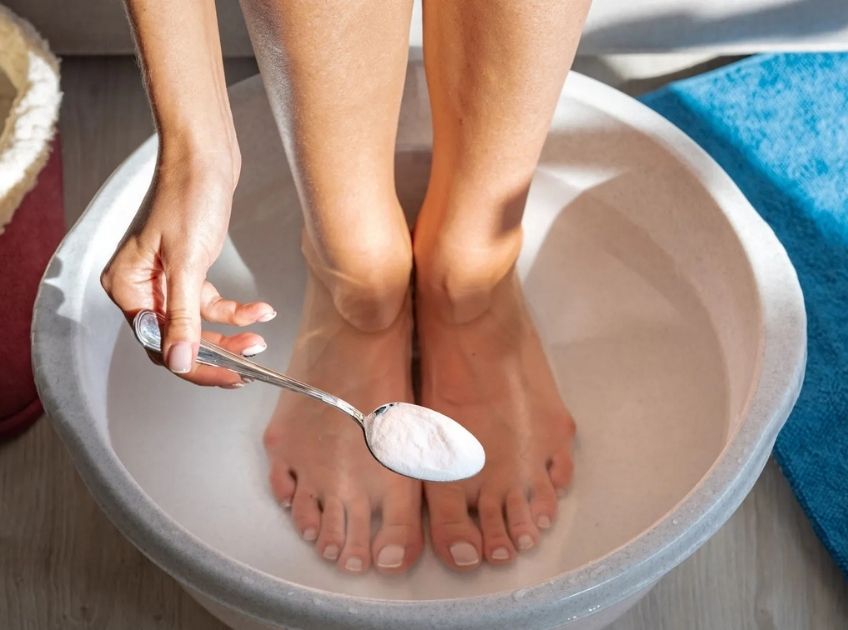
A baking soda foot soak is simply warm water mixed with sodium bicarbonate (baking soda) in a basin big enough to submerge your feet. Baking soda is slightly abrasive and alkaline, so it can help loosen and dissolve dead skin cells and neutralize odors on the feet.
People commonly use it for rough heels, calluses, mild foot odor and sometimes mild fungal issues, but medical sources emphasize using it carefully and not on broken or highly sensitive skin.
How Baking Soda May Help with Dead Skin
Gentle Exfoliation and Softening
Baking soda particles and its alkaline nature can help break down the bonds between dead skin cells, making them easier to slough off with a pumice stone or foot file after soaking. Some foot‑care resources mention baking soda soaks or pastes as an inexpensive exfoliating option for calluses and rough skin.
Because soaking softens the outer layer of skin, a light scrub afterwards can remove more dead skin with less force, which is gentler on your feet when done correctly.
Possible Antifungal and Deodorizing Effects
Baking soda foot baths and body baths have been suggested as supportive care for fungal skin and nail infections because sodium bicarbonate can inhibit growth of certain fungi and neutralize odor‑causing bacteria. A review cited by Medical News Today notes that baking soda may be useful as an antifungal agent for some skin and nail strains, though it shouldn’t replace proper medical treatment for significant infections. [1]
By reducing moisture, odor and superficial debris, a soak can make feet feel fresher—even if it doesn’t cure underlying conditions such as tinea pedis (athlete’s foot).
Risks: Why You Should Be Cautious
pH Disruption and Skin Barrier Damage
Healthy skin is mildly acidic, with a pH around 4.5–5.5, which helps maintain the “acid mantle” barrier and a healthy microbiome. Baking soda solutions have a higher pH, so frequent or concentrated use can raise skin pH, disrupt the barrier and strip natural oils.
Dermatology and skin‑care sources warn that this pH shift can cause dryness, redness, irritation and increased sensitivity, especially in people with pre‑existing dry skin, eczema or compromised barrier. Overuse may even worsen cracked heels by drying them further instead of healing them.
Over‑Soaking and Maceration
Foot health experts point out that prolonged soaking of the feet—whether in plain water or special solutions—can macerate the skin (over‑soften and waterlog it), making it more prone to splits and infection. This is especially risky between the toes, where moisture promotes fungal growth.
Guides that do recommend baking soda footbaths typically advise no more than 10–20 minutes per session and no more than about twice per week to reduce the risk of irritation and maceration.
People Who Should Be Extra Careful or Avoid It
You should talk to a doctor or podiatrist before using baking soda foot soaks if you have:
- Diabetes or peripheral neuropathy, because reduced sensation and circulation increase the risk of unnoticed burns or infections.
- Severe cracked heels, open cuts, infections or ulcers, where harsh soaks may delay healing or spread infection.
- Very dry, sensitive or eczema‑prone skin, as baking soda can exacerbate dryness and irritation.
How to Do a Safe Baking Soda Foot Soak (Step‑by‑Step)
If you and your healthcare provider agree it’s appropriate, follow this conservative, evidence‑informed routine:
1. Prepare The Soak:
- Water Temperature: Use warm, not hot, water in a clean basin large enough for both feet.
- Baking Soda Amount: Healthline suggests using only 2–3 tablespoons of baking soda in a full footbath of warm water. [2]
- Mix until fully dissolved so no harsh granules sit on the bottom where they could over‑irritate specific spots.
2. Soak Time:
- Soak your feet for 10–15 (max 20) minutes, keeping your feet fully submerged and relaxed.
- Do not extend beyond 20 minutes to avoid over‑softening and pH disruption.
3. Exfoliate Gently After The Soak:
Once your feet are soft:
- Remove them from the basin and pat dry lightly with a clean towel—don’t rub aggressively.
- Use a pumice stone or soft foot brush on the roughest areas (heels, balls of feet), applying light to moderate pressure in one direction, not harsh back‑and‑forth scrubbing.
- Focus on visibly thickened areas of dead skin and avoid tender, thin skin or any cracks that reach deeper layers.
4. Rinse and Dry Thoroughly:
- Rinse your feet with plain lukewarm water to remove any residual baking soda and loosened skin particles.
- Dry carefully, especially between toes, to prevent moisture‑related fungal infections.
5. Moisturize and Seal in Hydration:
- Hydration after exfoliation is critical to prevent new cracks and maintain smoothness.
- Immediately apply a rich, fragrance‑free moisturizer or heel balm containing softening agents like urea, salicylic acid or alpha hydroxy acids if recommended by your dermatologist.
- For very dry heels, many dermatologists and clinics recommend petroleum jelly, shea butter or coconut oil, then cotton socks overnight to lock in moisture.
How Often Can You Use a Baking Soda Foot Soak?
- Many foot‑care sources recommend limiting baking soda footbaths to about 1–2 times per week to reduce irritation risk.
- Daily use or using high concentrations is more likely to trigger dryness, redness and barrier disruption, especially on already dry heels.
- On “off” days, you can still soak your feet briefly in plain warm water or an Epsom salt solution and then moisturize, which is generally gentler.
If your feet start stinging or burning during the soak, remove them immediately, rinse thoroughly and apply a bland moisturizer; if symptoms persist, contact a healthcare provider.
Alternatives to Baking Soda Foot Soaks for Dead Skin
Because of the pH and irritation concerns, many dermatologists and foot specialists prefer other approaches to dead skin and callus management:
i. Plain Warm‑Water Soak + Pumice Stone
- Soaking in warm water alone for 10–15 minutes, then exfoliating with a pumice stone, is often sufficient and less irritating.
ii. Epsom Aalt (Magnesium Sulfate) Soak
- Epsom salt in warm water can help relax muscles and soften skin; some cracked‑heel guides recommend it as a pre‑scrub soak.
iii. Acid‑Based Heel Creams
- Creams containing urea, salicylic acid or lactic acid gently dissolve dead skin over time without soaking, and are widely used in cracked‑heel care.
iv. Moisturizing Masks and Natural Scrubs
- Honey, oatmeal, aloe vera and rice‑flour scrubs are used as gentler natural exfoliants and moisturizers in cracked‑heel regimes.
Foot health articles also stress that proper footwear, avoiding friction and keeping feet moisturized daily are key to preventing excessive callus buildup in the first place.
Foot Soak Options for Dead Skin
| Method | Main effect | Pros | Cons/Cautions | Best for |
| Baking soda foot soak | Alkaline softening + mild abrasion to loosen dead skin. | Cheap, easy, may help with odor and superficial fungus. | Can disrupt pH, cause dryness/irritation, not ideal for sensitive or diabetic feet; must limit time and frequency. | Occasional use on generally healthy feet with moderate callus. |
| Plain warm‑water soak | Hydrates and softens outer skin layer. | Very gentle, low risk, good prep for pumice. | Less “active” than other soaks; still must avoid over‑soaking. [3] | Most people, including those with sensitive skin (if doctor approves). |
| Epsom salt soak | Softening, mild exfoliation, muscle relaxation. [4] | Popular, gentle, helps relax tired feet. | Can still dry skin if overused; not a cure for deep cracks or infection. | Rough feet with general fatigue; prep for scrub + moisturizer. |
| No soak + keratolytic cream | Chemical dissolution of dead skin over time. | No waterlogging; targeted; often recommended in cracked‑heel care. | Requires consistency; some acids can sting broken skin. | Chronic dryness, cracked heels under dermatology guidance. |
Frequently Asked Questions (FAQ’S)
1. Can a baking soda foot soak remove dead skin without scrubbing?
A. Soaking alone can loosen and soften dead skin, but gentle mechanical exfoliation with a pumice stone or brush is usually needed to actually remove thick calluses or rough patches. A soak is best seen as a pre‑treatment to make safe, gentle scrubbing more effective, not a complete solution by itself.
2. Is it safe to use a baking soda foot soak every day?
A. Daily baking soda soaks are not recommended because frequent exposure to its higher pH can dry out and irritate the skin, and disrupt the acid mantle. Most foot‑care guidance suggests limiting baking soda treatments to around once or twice a week and using plain water or milder methods on other days.
3. Can people with diabetes use baking soda foot soaks?
A. People with diabetes or poor circulation should be very cautious with any at‑home foot treatment and should not use baking soda soaks unless specifically instructed by their doctor. Reduced sensation means irritation, burns or infections may go unnoticed, and professional podiatric care is usually safer for dead‑skin and callus removal in diabetics.
4. Does baking soda kill foot fungus?
A. Baking soda has shown antifungal activity against various fungi in lab settings, and some sources mention it may help with fungal skin and nail infections as a supportive soak. However, it is not a standalone cure; persistent fungal infections still require proper antifungal medication prescribed by a doctor.
5. What should I do if my feet burn or itch after a baking soda soak?
A. If you experience burning, intense itching or redness: Rinse feet thoroughly with cool or lukewarm water to remove all baking soda. Apply a bland, fragrance‑free moisturizer or petroleum jelly to soothe and re‑hydrate. Avoid further baking soda use; if symptoms persist or worsen, consult a healthcare provider as you may have irritation or contact dermatitis.
A baking soda foot soak can be a simple, low‑cost way to soften dead skin and make pumice‑stone exfoliation more effective, and it may offer some antifungal and deodorizing benefits. At the same time, its high alkalinity means overuse can easily dry out and irritate the feet, especially if you already have sensitive, cracked or diabetic skin, so it should be used sparingly, in a weak solution, and always followed by thorough drying and rich moisturizing. For many people, a routine built around warm‑water soaks, gentle manual exfoliation, daily moisturizing and appropriate footwear will be safer and just as effective for keeping dead skin and calluses under control.