Important: This article is for informational purposes only. Please read our full disclaimer for more details.
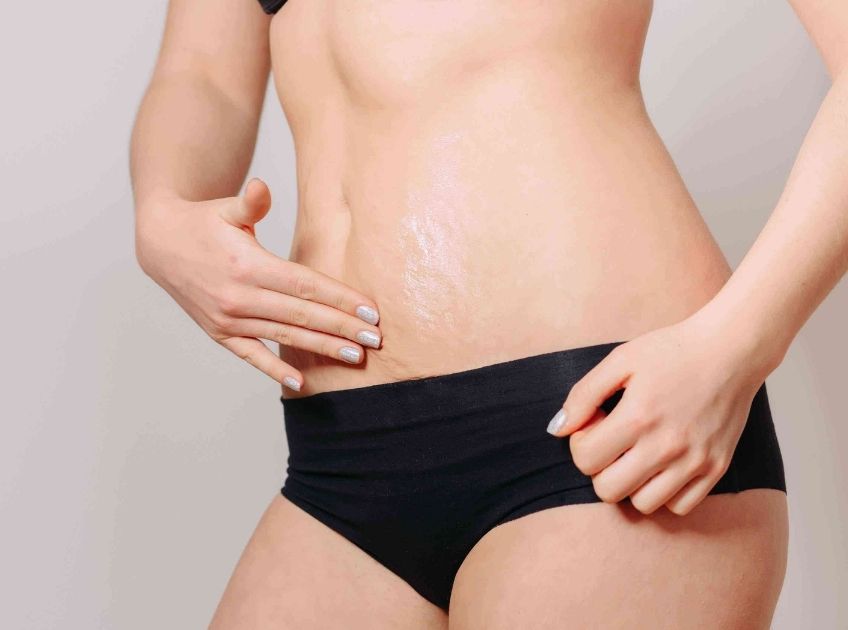
Stretch marks are very common. Many people get them during pregnancy, puberty, weight gain, or rapid muscle growth. They appear when the skin stretches faster than it can adjust.
At first, stretch marks may look red, purple, or dark brown. Over time, they usually fade and become lighter lines on the skin. While they rarely disappear completely, their appearance can improve.
Some people use essential oils to help their skin stay hydrated and elastic. These oils may support skin health and make stretch marks look softer and less visible. However, they cannot completely erase stretch marks.
Do Essential Oils Really Help Stretch Marks?
Essential oils may help improve the appearance of stretch marks because they can support skin health.
They may work in a few ways:
- Improve hydration – Well-moisturized skin is more flexible.
- Support collagen production – Collagen helps skin stay strong and elastic.
- Reduce inflammation – Some oils calm irritated skin.
- Provide antioxidants – These protect skin from damage.
However, it is important to understand that:
- Most research is small or limited.
- Many studies are done on animals or small groups of people.
- Essential oils are supportive treatments, not cures.
Still, many people find that using oils regularly makes their skin softer and smoother.
Oils With the Strongest Evidence
1. Argan Oil
What it is:
- Argan oil is extracted from the kernels of the argan tree found mainly in Morocco. It is rich in vitamin E, antioxidants, and essential fatty acids. These nutrients help nourish and protect the skin barrier.
What Research Suggests:
- Some studies suggest argan oil may help improve skin elasticity and hydration. Better elasticity allows skin to stretch more smoothly without tearing deeply. However, most research is still limited and more studies are needed.
Why it May Help Stretch Marks:
- Stretch marks form when the skin stretches quickly and collagen fibers break. Argan oil may help support the skin structure and improve flexibility. Regular moisturizing may also help stretch marks appear softer.
How to Use It:
- Apply a few drops of diluted argan oil to the affected area. Massage gently into the skin for about 1–2 minutes. For best results, use once or twice daily after showering.
Evidence Strength: Small human studies and observational research.
2. Gotu Kola Oil
What it is:
- Gotu kola, also called Centella asiatica, is a herb used in traditional medicine. It has been used for many years to support wound healing and skin repair. Many skincare products include it for its soothing effects.
What Research Suggests:
- Research suggests gotu kola may help increase collagen production in the skin. Collagen helps keep the skin strong, elastic, and smooth. Some early studies also suggest it may improve skin firmness.
Why it May Help Stretch Marks:
- Since stretch marks involve damage to collagen fibers, ingredients that support collagen may help the skin recover better. Gotu kola may support skin regeneration over time. However, research specifically on stretch marks is still limited.
How to Use It:
- Dilute gotu kola essential oil in a carrier oil such as jojoba or almond oil. Massage it gently into areas prone to stretch marks. Use it once daily for consistent skin support.
Evidence Strength: Limited human research and traditional use.
3. Rosehip Oil
What it is:
- Rosehip oil comes from the seeds of wild rose plants. It contains vitamin A, vitamin C, and essential fatty acids that help support healthy skin. Because of its nutrients, it is widely used in skincare products.
What Research Suggests:
- Some studies on pregnant women found that products containing rosehip oil helped improve skin hydration and elasticity. These effects may reduce the severity of stretch marks. However, the research size is still small.
Why it May Help:
- Rosehip oil supports skin repair and collagen production. It may also help improve the skin’s texture and tone. Over time, this may make stretch marks appear less noticeable.
How to Use:
- Massage a small amount of diluted rosehip oil into the skin. Apply it once or twice daily, especially after bathing. Consistent use may help keep the skin soft and hydrated.
Evidence Strength: Small human studies.
4. Bitter Almond Oil
What it is:
- Almond oil is extracted from almond seeds and is often used in skincare. It contains vitamin E, healthy fats, and antioxidants. These nutrients help keep the skin moisturized and protected.
Research Findings:
- Some studies suggest that almond oil massage may reduce the appearance of stretch marks during pregnancy. However, the benefit may come partly from the massage itself. Massage can increase circulation and improve skin flexibility.
Important Note:: While almond oil is commonly used, bitter almond oil should be used carefully. Some forms may cause irritation in sensitive skin. It is best to dilute the oil before applying it.
How to Use:
- Mix a few drops with a carrier oil and massage gently into the skin. Use slow circular movements to help the oil absorb better. Apply daily for better skin hydration.
Evidence Strength: Limited studies.
5. Pomegranate Oil
What it is:
- Pomegranate oil is extracted from pomegranate seeds. It contains powerful antioxidants and fatty acids. These nutrients help protect the skin from environmental damage.
Research Findings:
- Some small studies suggest pomegranate oil may help improve skin thickness and elasticity. Healthier skin structure may help reduce the appearance of stretch marks. However, more human studies are needed.
Why it May Help:
- Antioxidants protect the skin from free radical damage. This may support skin repair and renewal. Healthy skin cells may improve the look of stretch marks over time.
How to Use:
- Mix a few drops with a carrier oil before applying to the skin. Massage gently into stretch mark areas once or twice daily. Regular use may help improve skin softness.
Evidence Strength: Early research.
Oils That May Help (Limited Evidence)
6. Neroli Oil
Neroli oil is made from the flowers of the bitter orange tree. It has a light floral scent and is often used in natural skincare products. Many people use it to support skin tone and hydration.
Possible benefits include:
- Antioxidant properties
- Skin soothing effects
- Support for skin regeneration
- Although direct research on stretch marks is limited, neroli oil may help improve overall skin health.
7. Shea Butter
Shea butter is a thick natural fat extracted from the shea tree nut. It is widely used as a deep moisturizer in skincare products. Many people apply it to prevent dry or rough skin.
Possible benefits include:
- Deep hydration
- Improved skin barrier
- Vitamin A support for skin health
However, current research does not clearly prove that shea butter prevents stretch marks.
8. Olive Oil
Olive oil is a common household oil that is also used for skincare. It contains antioxidants and healthy fats that help moisturize the skin. Many people use it as a natural skin softener.
Some research suggests olive oil alone may not prevent stretch marks during pregnancy. However, it can still help keep skin hydrated and smooth. Hydrated skin may look healthier and feel more comfortable.
Lifestyle Habits That Support Healthy Skin
Healthy habits can also help reduce the severity of stretch marks.
Try to:
- Maintain stable body weight
- Eat enough protein and vitamins
- Drink enough water
- Keep skin regularly moisturized
Genetics and hormones still play a big role, so stretch marks are often normal and unavoidable.
Supplementary Oils and Helpful Ingredients
These ingredients are often used together with other oils. They may support skin health and hydration. However, they are usually not the main treatment for stretch marks.
9. Vitamin E Oil
- Helps protect the skin from oxidative damage.
- Supports skin hydration and barrier repair.
- Often included in scar-care products.
10. Lavender Oil
- Known for calming and soothing skin.
- May support wound healing.
- Can help reduce mild skin irritation.
11. Patchouli Oil
- Contains antioxidants that support skin health.
- May help promote collagen formation.
- Often used in natural skincare blends.
12. Bitter Orange Oil
- Sometimes used for skin tightening effects.
- Contains natural aromatic compounds.
- Can increase sun sensitivity, so use carefully.
Frequently Asked Questions (FAQ’S)
1. Do essential oils really help reduce stretch marks?
A. Essential oils may help improve skin hydration, elasticity, and overall texture. They cannot remove stretch marks completely but may make them appear lighter and smoother with regular use.
2. Which essential oils are best for stretch marks?
A. Some commonly used oils include argan oil, rosehip oil, gotu kola oil, almond oil, and pomegranate oil. These oils contain nutrients that may support skin repair and elasticity.
3. How should essential oils be applied to stretch marks?
A. Essential oils should always be diluted with a carrier oil such as coconut, jojoba, or almond oil. Massage gently into the skin once or twice daily for better absorption.
4. Are essential oils safe to use during pregnancy for stretch marks?
A. Safety during pregnancy is not fully proven for all essential oils. Pregnant women should use very low dilution and consult a healthcare professional before using essential oils.
5. How long does it take to see results from essential oils?
A. Results may take several weeks or months. Consistent use, gentle massage, and good skin hydration can help improve the appearance of stretch marks over time.
Stretch marks are a natural part of life. They appear when the skin stretches quickly, and they are extremely common.
Essential oils may help by:
- Keeping skin hydrated
- Supporting elasticity
- Improving overall skin comfort
However, they cannot completely remove stretch marks. Most research shows they work best as supportive skincare, not as a cure.
If you want to try essential oils, remember to:
- Always dilute them properly
- Perform a patch test
- Use them consistently but gently
For deeper or severe stretch marks, a dermatologist may recommend medical treatments that have stronger evidence. With patience, good skincare, and healthy habits, stretch marks often fade and become less noticeable over time.