Important: This article is for informational purposes only. Please read our full disclaimer for more details.
Many people struggle with falling asleep or waking up feeling exhausted — surprisingly often due to low melatonin levels.
Melatonin is the hormone responsible for regulating your internal clock, and research shows it affects not only sleep but also hunger, mood, brain aging, and metabolic health [1][2].
Instead of relying only on supplements, studies show that melatonin-rich foods can naturally increase blood melatonin levels and improve sleep quality [3].
Why Your Body Needs Melatonin?
- Regulates Sleep-Wake Cycle: Melatonin rises at night and drops in the morning, helping your brain understand when to sleep and wake. Studies show melatonin improves sleep efficiency and helps with jet lag [4].
- Protects Brain Health: Melatonin has antioxidant and neuroprotective effects. Research links higher melatonin levels to reduced risk of Alzheimer’s and Parkinson’s disease [5][6].
- Balances Hunger & Metabolism: Sleep loss affects ghrelin and leptin — leading to overeating, cravings, and weight gain. Melatonin helps restore this balance [7].
- Supports Eye Health: Low melatonin levels are associated with age-related macular degeneration (AMD). Supplementation showed improvements in retinal health [8].
- Helps Children With Sleep Disorders: Under medical supervision, melatonin may support sleep in children with conditions like ADHD or autism spectrum disorder [9].
6 Foods High in Melatonin
1. Tart Cherries — One of Nature’s Strongest Melatonin Sources
Studies confirm that tart cherries significantly increase melatonin levels and improve sleep duration [10].
Researchers found tart cherry juice may help reduce insomnia symptoms in adults [11].
How to use:
- Eat whole tart cherries
- Add dried cherries to yogurt
- Drink ½ cup tart cherry juice before bed (watch sugar intake)
2. Goji Berries — Anti-Aging + Melatonin Boost
Goji berries contain notable levels of melatonin and antioxidants that support sleep and mental calmness [12].
One study found that daily goji berry consumption improved mood and sleep quality in adults [13].
3. Eggs — High Melatonin Among Animal Foods
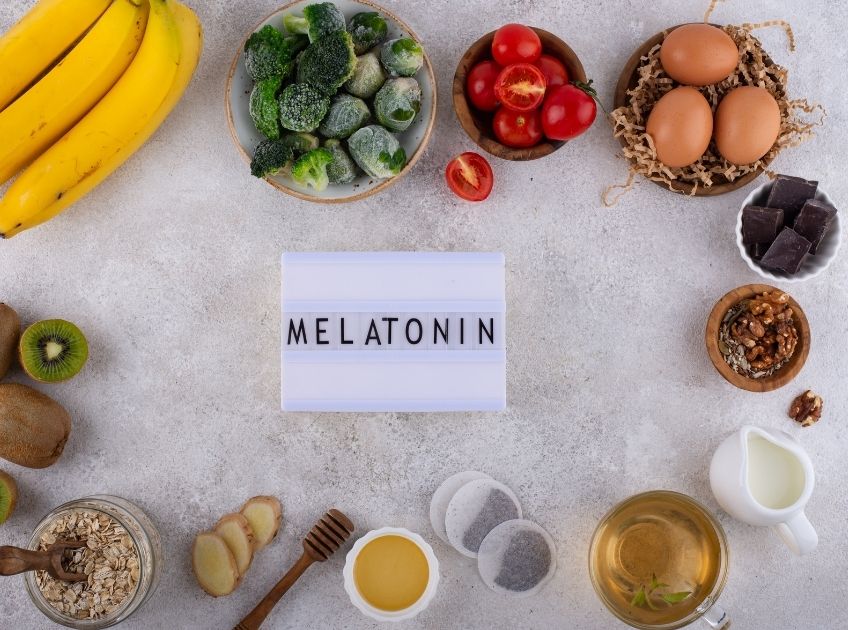
Eggs contain one of the highest melatonin concentrations among animal products [14].
They also provide vitamin D, iron, protein, which support hormone stability — important for women’s sleep cycles [15].
4. Milk — The Traditional Sleep Remedy Backed by Science
Warm milk contains naturally occurring melatonin, and studies confirm it may help improve relaxation and sleep onset [16].
Additional research suggests the amino acid tryptophan in milk enhances melatonin production [17].
5. Oily Fish — Melatonin + Omega-3 for Deep Sleep
Oily fish like salmon, tuna, sardines are rich in melatonin and contain omega-3s, which help produce serotonin — later converted to melatonin [18].
A study showed that people who ate oily fish three times a week reported better sleep and daytime functioning [19].
6. Nuts — Pistachios & Almonds Lead the Pack
Pistachios contain some of the highest recorded food-based melatonin levels [20]. Almonds also provide melatonin along with magnesium, known to aid relaxation.
One study found that pistachios significantly increased nighttime melatonin levels due to their high concentration [21].
Best ways to use:
- 6–10 pistachios at night
- Add almonds to your evening snack or oats
Melatonin Food Comparison Table
| Food | Melatonin Strength | Key Benefit | Research |
| Tart Cherries | ⭐⭐⭐⭐ | Fall asleep faster | [10][11] |
| Goji Berries | ⭐⭐⭐⭐ | Stress relief + mood calm | [12][13] |
| Eggs | ⭐⭐⭐ | Hormone stabilization | [14][15] |
| Milk | ⭐⭐⭐ | Relaxation + sleep onset | [16][17] |
| Oily Fish | ⭐⭐⭐⭐ | Deep sleep + serotonin | [18][19] |
| Nuts | ⭐⭐⭐⭐ | High melatonin + magnesium | [20][21] |
If you’re struggling with sleep, low energy, or mood swings, try adding these melatonin-rich foods to your evening routine.
They’re natural, safe, and supported by strong scientific evidence. Better sleep doesn’t always require medication — sometimes, it starts with simple foods already in your kitchen.
That’s a great approach! I’ll revise the FAQs to focus on unique takeaways and value for the reader, ensuring the questions don’t use the phrases “highlighted in the article” or “according to the article,” but still derive their answers solely from the provided text.
Frequently Asked Questions (FAQ’S)
1. Which two animal-based foods are listed, and what unique benefit does each offer toward improving sleep?
A. The two animal-based foods are Eggs and Milk. Eggs offer one of the highest melatonin concentrations among animal products and provide nutrients like Vitamin D and iron that support hormone stabilization, which is important for women’s sleep cycles. Milk is a traditional sleep remedy confirmed to help with relaxation and sleep onset, and it contains the amino acid tryptophan, which enhances melatonin production.
2. If I want the strongest food source of melatonin, should I choose Tart Cherries or Pistachios, and what is the difference in their suggested use?
A. Both are listed with the highest strength rating . Tart Cherries are suggested to be consumed as juice (1/2 cup) or whole before bed to help you fall asleep faster and improve sleep duration. Pistachios are suggested as a small nighttime snack (6–10 nuts) because they offer a high melatonin concentration along with magnesium, known to aid relaxation.
3. How does consuming oily fish indirectly support the body’s natural production of melatonin?
A. Oily fish (like salmon and tuna) are rich in melatonin, but they also contain Omega-3 fatty acids. The article explains that Omega-3s help the body produce serotonin, which is then converted into melatonin, supporting a deeper overall sleep.
Incorporating melatonin-rich foods into your daily routine is a simple, natural way to support healthier sleep patterns and overall well-being. Whether you choose cherries, nuts, eggs, milk, or herbal teas, these foods offer gentle, nutrition-based support for your body’s internal clock. While they’re not a replacement for good sleep hygiene or medical guidance, they can be a valuable addition to a balanced lifestyle. By making mindful dietary choices, you can nurture more restful nights and more energized days—one delicious bite at a time.