Important: This article is for informational purposes only. Please read our full disclaimer for more details.
Foundation oxidation—the frustrating darkening that happens minutes after you apply your makeup—is one of the most common makeup concerns. This guide delivers proven, science-backed strategies to prevent or significantly minimize this problem, keeping your foundation looking fresh and true to color all day.
Article Contains
The Chemical Truth: Why Foundation Oxidizes
For true expertise, it’s essential to understand the science behind the shift. Foundation pigments, primarily Iron Oxides (compounds containing iron, such as (1)FE2O3 and FE3O4, are stable when dry.
Chemistry Corner: The Oxidation Reaction:
Oxidation is a chemical reaction involving the loss of electrons. In makeup, this reaction is sped up by your skin’s natural oils (sebum) and moisture.
- The Catalyst: Your skin’s sebum (made of triglycerides and fatty acids) acts as the catalyst. When these oils mix with the foundation (2), they introduce oxygen and moisture.
- The Reaction: The exposure to oxygen and moisture causes a change in the oxidation state of the iron compounds within the pigments.
- The Result: This chemical alteration changes the way the pigment reflects light, resulting in a visible color shift—usually a darkening, dulling, or an orange/red tone.
The goal of any prevention routine is to build a physical barrier to prevent this reaction from occurring.
The Quick Answer: 7 Essential Prevention Steps
Implement these seven strategies in order of effectiveness for immediate results:
- Use a Silicone-Based Primer: Creates the non-negotiable protective barrier against skin oils.
- Choose the Right Moisturizer: Lightweight, oil-free, and applied 5–10 minutes before makeup.
- Select Non-Oxidizing Formulas: Look for foundations with silicon-coated pigments.
- Apply Setting Spray: Stabilizes the finished look and prevents oil breakdown.
- Set with Translucent Powder: Absorbs surface oil without adding color that darkens the base.
- Blot Throughout the Day: Remove accumulated excess oil to halt the reaction’s progression.
- Test Foundations Before Buying: A 4-hour, real-world wear test is the only reliable method.
Myth Debunked: Do Not Simply Buy a Lighter Shade!
If your foundation turns orange, the solution is not to buy a lighter shade. A lighter shade will only look correct for the first 15 minutes, but will oxidize to the same degree (just from a lighter starting point), leaving you with a final color that is still unnaturally dark, ashy, or dull. The true solution is to fix the formula and the barrier.
Step-by-Step Prevention Strategy (The Foundation Routine)
Step 1: Start With Clean, Prepared Skin
| Goal | Action |
| Normalize | Cleanse face thoroughly 15–20 minutes before application. |
| Minimize Oil | Use an oil-free cleanser if you have oily skin. |
| Remove Debris | Exfoliate gently 2–3 times per week to remove dead skin cells that trap oil. |
Step 2: Choose the Right Moisturizer and Timing
Heavy, greasy moisturizers add excess oil, accelerating oxidation. Timing is critical.
| Rule | Action & Characteristics |
| Formula | Switch to lightweight, oil-free, water-based, or gel-based moisturizers. |
| Application | Apply moisturizer 5–10 minutes before foundation. Wait until it is fully absorbed. |
| Dry Skin Note | Use hydrating primers, not thick creams, during the day. |
Step 3: Apply a High-Quality Primer (The Essential Barrier)
A silicone-based primer creates the physical wall that prevents skin oils from chemically reacting with foundation pigments.
- The Rule: Use a silicone-based primer exclusively (3) — this is non-negotiable for oxidation prevention.
- Application: Apply a pea-sized amount, focusing on your T-zone (forehead, nose, chin).
- Wait Time: Wait 1–2 minutes for the primer to set completely before applying foundation.
| Skin Type | Recommended Primer Focus |
| Oily Skin | Mattifying or Oil-Control Primers |
| Dry Skin | Hydrating Primers with a Semi-Matte Finish |
Step 4: Select a Non-Oxidizing Foundation Formula
You cannot fix a poor formula with technique alone. Look for advanced pigment stabilization.
| Look For on the Label | Formulas to Avoid |
| “Non-oxidizing formula” | Foundations with high alcohol content |
| “Silicon-coated pigments” | Foundations with high amounts of iron oxides (especially black) |
| Best Solvents: D5 (Cyclopentasiloxane) | Ingredients: Talc (can interact and darken) |
| Specific Brands: Giorgio Armani, NARS, Estée Lauder | Specific Solvents: Isododecane listed before D5 |
Step 5: Apply Foundation and Set the Look
| Step | Technique | Goal |
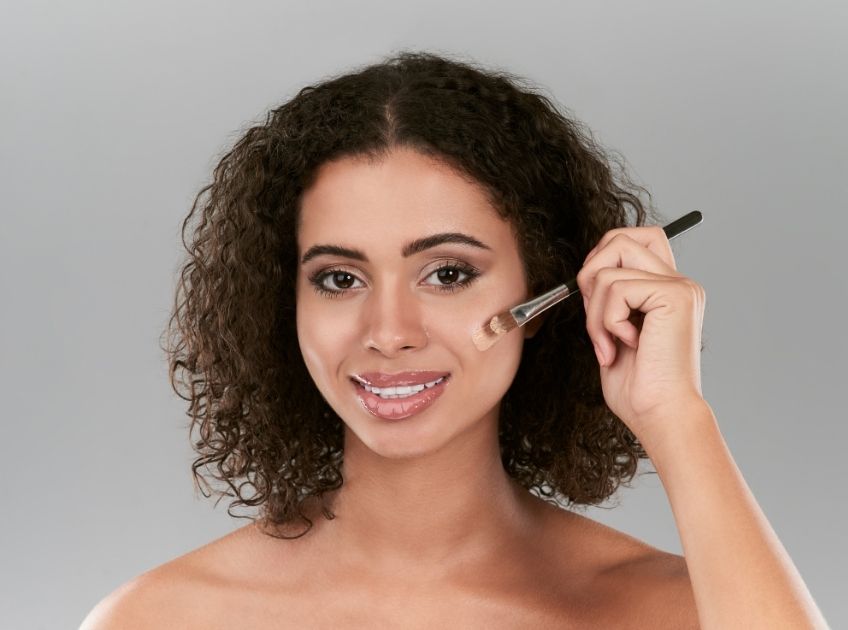
| Application | Use a damp beauty sponge to apply a thin, even layer. | Prevents thick patches that worsen oxidation. |
| Lock-In | Option A (Recommended): Use a lightweight setting spray after application. | Creates a protective veil, stabilizes the formula. |
| Oil Control | Option B (If Oily): Use a light dusting of translucent powder only on the T-zone. | Absorbs immediate surface oil. |
Step 6: Avoid Problem Ingredients in Other Products
Other products worn underneath the foundation can trigger oxidation.
| Product/Ingredient to Avoid | Reason | Better Alternative |
| Mineral Sunscreens (Titanium Dioxide, Zinc Oxide) | Can react with foundation pigments and morph color. | Oil-free, fully absorbed chemical sunscreens. |
| Heavy, Oil-Based Serums/Creams | Creates a slick surface that accelerates oil-foundation mixing. | Water-based serums; allow 15 minutes absorption time. |
Step 7: Blot Throughout the Day
Your skin produces oil continuously. This step is crucial for maintaining color stability mid-day.
- Carry oil-absorbing blotting papers (not powder compacts).
- Gently press (do not rub) the papers on oily areas (T-zone) every 2–3 hours, or as needed.
Pro Tip: This removes the catalyst (excess sebum) before it can react further.
The 4-Hour Real-World Test: The Only Way to Know
You must test a foundation under real-world conditions to confirm its oxidation resistance on your unique skin.
- Get a Sample: Obtain a sample from the brand.
- Application: Apply to your jawline, blending down to your neck.
- Wear Test: Wear it for 4–5 hours during normal daily activities.
- Check the color multiple times in natural sunlight (indoor lighting is deceiving).
- Only purchase the full size if the color remains true and stable throughout the entire test period.
Troubleshooting: Special Situations Quick Guide
| Skin Type | Recommended Routine Adjustment |
| Very Oily Skin | Use a gel-based moisturizer. Use a matte setting spray. Blot every 1–2 hours. Consider powder foundation. |
| Dry Skin | Focus on hydrating primers. Skip heavy powder. Use setting spray only. Choose luminous formulas. |
| Combination Skin | Apply mattifying primer to T-zone only. Hydrating primer on cheeks. Blot only the oily zones. |
Frequently Asked Questions (FAQ’S)
1. Does primer really make that much of a difference?
A. Yes. Primer is often the single most effective product because it creates the necessary physical barrier between skin oils and foundation.
2. Can I completely stop my foundation from oxidizing?
A. You can reduce it by 70–80%. Highly stable, non-oxidizing formulas combined with the right routine can make the effect barely noticeable.
3. Is oxidation happening if my foundation just looks duller (not darker)?
A. Yes. Dullness means pigments have clumped or sebum has soaked in, causing light to reflect poorly. The same prevention strategies apply.
3. How do I know if my sunscreen is causing the problem?
A. Test your foundation on different days: one with your current sunscreen, and one without. If the oxidation is worse with the sunscreen, switch to an oil-free, chemical formula.
Foundation oxidation is a chemical problem with a strategic solution. Your color-true foundation all day is achievable by prioritizing a silicone barrier, proper moisture timing, and oil control.