Important: This article is for informational purposes only. Please read our full disclaimer for more details.
You spend time blending your eyeshadow to perfection, but within a few hours it begins to crease, fade, or disappear. This common issue, often called the “midday fade,” is not caused by your eyeshadow palette alone.
Eyeshadow Longevity Depends on Three Key Factors:
- Your skin type (especially oil production)
- Environmental conditions
- Your preparation and application technique
Without the right base, your skin’s natural oils break down the pigment, causing it to move and lose intensity.
Quick Diagnosis: What’s Ruining Your Eyeshadow?
Before fixing the problem, identify it 👇
| What You Notice | Root Cause | Quick Fix |
| Creasing in folds | Oily lids / hooded eyes | Use matte eye primer |
| Patchy application | Skincare residue | Blot lids before makeup |
| Dull color payoff | No grip base | Use cream shadow underneath |
| Glitter fallout | Poor adhesion | Use setting spray on brush |
The 3-Step Routine for Long-Lasting Eyeshadow
1. Clean and Prep Your Eyelids
Your eyelids must be oil-free before applying makeup.
- Skincare products like eye creams create a slippery surface
- This prevents eyeshadow from adhering properly
What to do:
- Clean eyelids with micellar water
- Press a tissue gently to absorb excess oil
2. Use a Dedicated Eye Primer
Eye primer is essential for long wear.
- Avoid using concealer as a base
- Concealer is creamy and encourages creasing
What to do:
- Apply a thin layer of eye primer
- Let it sit for 20–30 seconds until slightly tacky
3. Apply Using the Press-and-Pack Method
Your application technique directly affects longevity.
- Avoid swiping back and forth
- This removes pigment and creates uneven results
What to do:
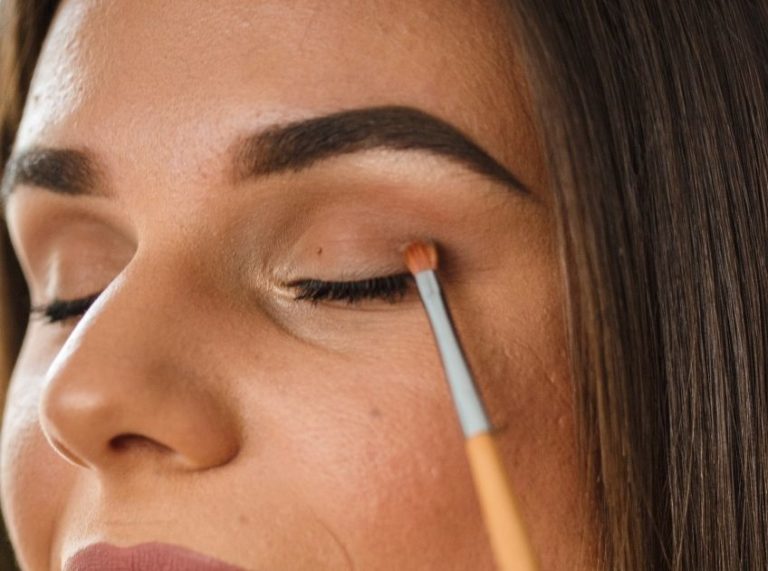
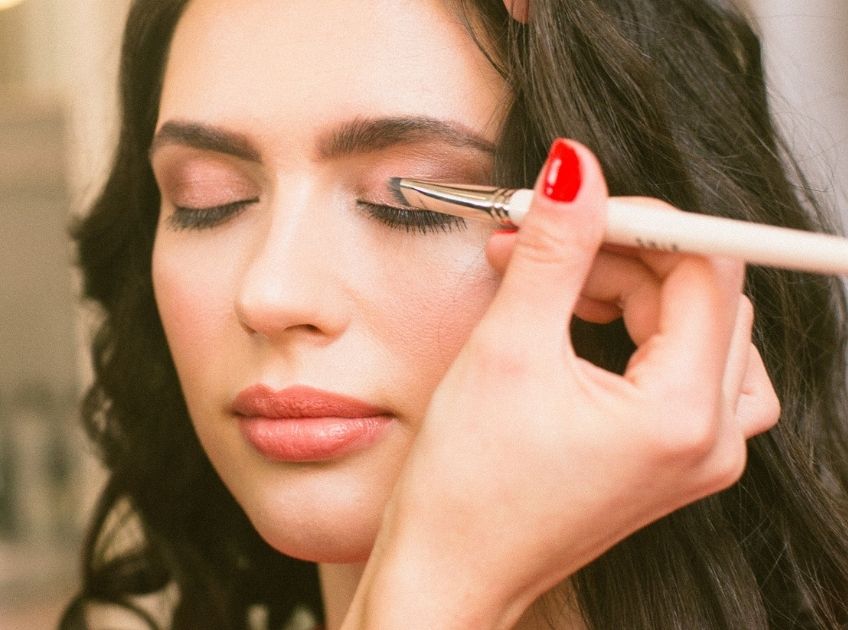
- Use a flat brush
- Press eyeshadow onto the lid instead of dragging
Pro Layering Technique:
- Apply cream shadow first
- Layer powder shadow on top for better hold.
Professional Tips for Better Results
- Set Your Eyeshadow Properly: Use a damp sponge with setting spray and lightly press over the lids.
- Replace Old Products: Eyeshadows older than two years lose their binding ability.
- Focus on Grip Over Price: A good primer will always improve performance, even with affordable eyeshadows.
Frequently Asked Questions (FAQ’S)
1. Why does my eyeshadow crease even with primer?
A. You may be using too much product. Apply a thin layer only.
2. Can I use face primer on my eyelids?
A. No. Face primers are designed to smooth, not grip pigment.
3. Does skin type affect eyeshadow wear?
A. Yes. Oily lids need mattifying primers, while dry lids need light hydration.
4. Why does my transition shade disappear?
A. The crease area moves constantly. Apply slightly above the fold.
5. Can I use setting spray on eyelids?
A. Yes, but apply it on your brush or sponge, not directly on your eyes.
Fading eyeshadow is not unavoidable. It is usually the result of improper preparation and technique. By focusing on a clean base, using a proper primer, and applying eyeshadow with the correct method, you can achieve long-lasting, crease-free results throughout the day.
Disclaimer: Always perform a patch test before using new products near the eye area. If irritation occurs, discontinue use and consult a professional.