Important: This article is for informational purposes only. Please read our full disclaimer for more details.
Whether your mole removal was for medical reasons or purely cosmetic, the way you treat the area in the following weeks determines how well it heals—and how much of a scar is left behind.
Proper aftercare boils down to three simple goals: keep it clean, keep it moist, and keep it shaded. Here is your guide to navigating the healing process, from the first 24 hours to long-term scar management [1].
The Healing Timeline: What to Expect
Healing isn’t an overnight event; it’s a biological marathon. Use this table to track your progress [2].
| Timeframe | What’s Happening | Visual/Sensation | Primary Focus |
| 0–48 Hours | The wound seals; initial inflammation starts. | Tender, red, slightly swollen. | Protect the initial dressing; keep it dry. |
| Days 2–7 | New tissue forms; the “bridge” begins. | Pink skin; possible light crusting. | Gentle cleansing; keep the wound moist. |
| Weeks 2–4 | Wound closes; stitches (if any) are removed. | Pink line or flat mark; less tender. | Consistent moisturizing; start scar care. |
| Months 1–6+ | Collagen remodeling; scar maturation. | Scar fades from pink to white/flesh-toned. | Strict sun protection; silicone therapy. |
Immediate Aftercare (The First 48 Hours)
The first two days are critical for preventing infection.
- Leave the Bandage Alone: Your dermatologist applied that first dressing for a reason. Keep it in place for the full 24–48 hours as instructed.
- Manage Minor Oozing: A little spot of blood is normal. If it soaks through, apply firm, steady pressure with clean gauze for 15 minutes.
- Pain Management: Acetaminophen or ibuprofen usually does the trick. Avoid aspirin unless prescribed, as it can thin the blood and cause the site to bleed.
The Golden Rules of Cleaning
Once you’re cleared to remove the bandage (usually after 48 hours), follow this routine once or twice daily:
- Wash Your Hands: Never touch a fresh wound with dirty fingers.
- Be Gentle: Use lukewarm water and a mild, fragrance-free cleanser. Use your fingertips only—no washcloths or loofahs.
- Pat, Don’t Rub: Gently pat the area dry with a clean paper towel.
- The “Moist” Myth: Forget the old advice to “let it breathe.” Wounds heal significantly faster and with less scarring when they are kept moist. Apply a thin layer of plain petroleum jelly (like Vaseline) to prevent a hard scab from forming.
- Cover Up: Apply a fresh, sterile bandage to keep the petroleum jelly in place and the bacteria out.
Stitches vs Shave Removal
The care varies slightly depending on how the mole was removed:
If You Have Stitches (Excision):
- Avoid Tension: Don’t do heavy lifting or intense exercise that “tugs” at the area, especially if it’s on your back, shoulders, or joints.
- Watch the Clock: Stitches on the face usually come out in 5–7 days; on the body, it may take up to 14 days.
If the Mole Was Shaved:
- No Picking: A shave removal acts like a deep scrape. It will form a thin crust. If you pick it, you risk a permanent “pitted” scar.
- Stay Greasy: Keep that petroleum jelly layer consistent until the skin is completely smooth and pink.
Long-Term Scar Management
Once the wound is closed and the skin is no longer “open,” your focus shifts to aesthetics.
- Silicone is King: Once stitches are out, silicone gel or sheets are the gold standard for flattening and softening scars. Use them for 8–12 weeks for the best results. [3]
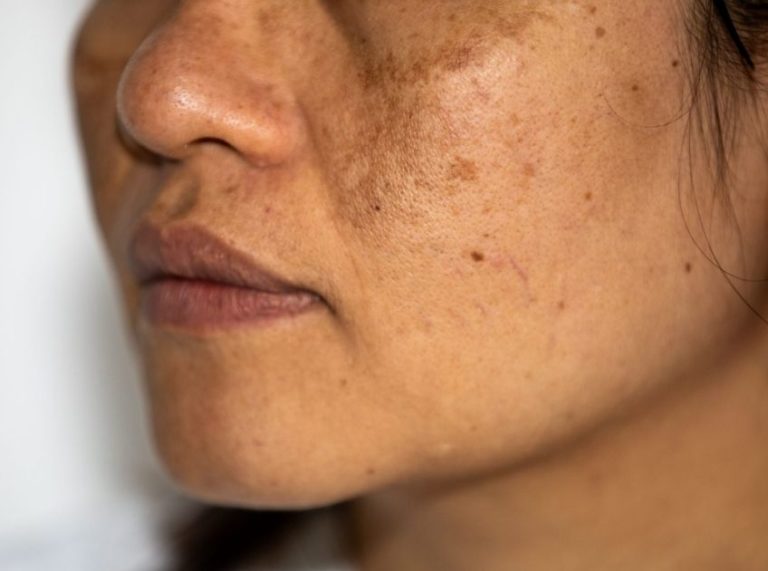
- Sun Protection is Non-Negotiable: New scar tissue has no pigment protection. UV rays will permanently darken a fresh scar (hyperpigmentation). Use SPF 30+ daily and cover the area with clothing for at least the first year. [4]
- Skip the “Actives”: Keep retinoids, vitamin C serums, and chemical exfoliants away from the site until your doctor gives the green light.
When to Call Your Dermatologist
Minor pinkness is normal. Infection is not. Contact your doctor if you notice:
- Pain that gets worse after day 3 instead of better.
- Spreading redness or “red streaks” moving away from the site.
- Pus or a foul odor.
- Fever or chills.
- The wound “pops” open or begins to bleed heavily.
Quick Tips for Success
DO: Follow your specific pathology results. Even if a mole looked “fine,” always confirm the lab report with your doctor.
DON’T: Use antibiotic ointments (like Neosporin) unless specifically told to. Many people develop a contact allergy to them, causing a red, itchy rash that looks like an infection. Plain petroleum jelly is usually safer and more effective.
Frequently Asked Questions (FAQ’S)
1. Can I return to my exercise routine immediately after the procedure?
A. It depends on the location of the mole and the removal method. If you have stitches on a “high-tension” area like your back, shoulders, or joints, you should avoid heavy lifting and intense stretching for 10–14 days. Tugging at the wound can cause the stitches to pop or the resulting scar to stretch and widen (known as a “stretched scar”). For shave removals or moles on low-movement areas, light activity is usually fine after 48 hours, but always check with your dermatologist first.
2. While it seems logical to use an antibiotic cream, many people (up to 10%) actually develop a contact allergy to Neomycin or Bacitracin, the active ingredients in common over-the-counter ointments. This allergy causes a red, itchy, bumpy rash that can be easily mistaken for an infection, complicating the healing process. Plain petroleum jelly is hypoallergenic, keeps the wound perfectly moist, and doesn’t carry the risk of an adverse reaction.
3. When is it safe to go swimming or take a bath?
A. You should avoid “soaking” the wound—this includes swimming pools, hot tubs, and baths—until the skin has completely closed and any stitches have been removed (usually 2 weeks). Submerging a fresh wound can soften the tissue too much, potentially reopening it, and exposes the site to bacteria or chemicals like chlorine that can irritate the healing skin. Stick to quick, gentle showers until your doctor gives you the green light.
4. How long should I wait before starting silicone scar therapy?
A. Timing is everything with silicone gels and sheets. You should only start using them once the wound is fully closed and any stitches are out—typically 2 to 3 weeks post-procedure. If you apply silicone too early to an open wound, it can trap bacteria and cause maceration (soggy skin). Once the site is a solid pink line with no scabbing or oozing, you can begin daily silicone application to flatten and soften the scar.
5. What happens if the mole starts to grow back?
A. It is possible for a mole to recur, especially after a shave removal where some pigment-producing cells may remain deep in the skin. If you notice a brown spot or “freckle” appearing within the scar, don’t panic, but do schedule a follow-up. Your dermatologist will want to examine it to ensure it’s just a benign recurrence and not a sign of atypical cells that require further treatment.
Caring for your skin after mole removal is about doing the simple things consistently: gentle cleansing, keeping the wound moist and covered, protecting it from the sun, and avoiding anything that irritates or reopens the site. With careful aftercare—and, when appropriate, evidence‑based scar treatments like silicone gel plus daily sunscreen—most people heal smoothly, with scars that continue to fade over time. If at any point the area becomes more painful, red, swollen, or starts to ooze, or if you just feel unsure, checking back with your dermatologist is always the safest move.